
I am Bingfeng Zhang, specializing in observational seismology, and currently a research fellow at the School of Physical
and Mathematical Sciences, Nanyang Technological University  , working with
Prof. Ping Tong.
, working with
Prof. Ping Tong.
I graduated from Jilin University with a bachelor’s degree in Geophysics in 2018, and then received a Ph.D. degree in Geophysics at Zhejiang University in 2023, supervised by Prof. Xuewei Bao.
My research interests have been focusing on illuminating deep Earth structures using various modern seismological techniques. With high-resolution subsurface images across multiple scales, I aim to gain insights for Earth’s dynamic processes and provide scientific support for natural resource exploration.
At present, I’m working on the seismic tomographic imaging of circum-Tibet and African regions that have great mineral resource potentials, and exploring lithospheric dynamic processes that influence the generation of mineral deposits.
As of Sep. 2026, I have first-authored eight papers in top-tier geoscience journals (e.g., NC, Geology, EPSL, GRL, JGR).

Please feel free to get in touch if you need anything or if you’re interested in academic collaboration. My current email address is bingfeng.zhang@ntu.edu.sg
🔥 News
- 2026.08: 🎉🎉 Our paper on surface-wave tomography in the Pamir is accepted by GRL
- 2026.02: 🎉🎉 My dissertation is nominated as Outstanding Doctoral Dissertation of Zhejiang Province
- 2026.01: 🎉🎉 Our paper on induced seismicity of the Luxian is accepted by EPSL
- 2025.10: 🎉🎉 Our paper on 2025 M7.1 Dingri earthquake is accepted by JGR
- 2024.12: 🎉🎉 My dissertation is awarded as ZJU Outstanding Doctoral Dissertation
- 2024.12: Hello World
💼 Employments
- 2023.12-present, Research Fellow, Nanyang Technological University, Singapore
🎓 Educations
- 2018.09-2023.09, Ph.D. in Geophysics, Zhejiang University, Hangzhou, China
- 2014.09-2018.07, B.S. in Geophysics, Jilin University, Changchun, China
💡 Research Highlights
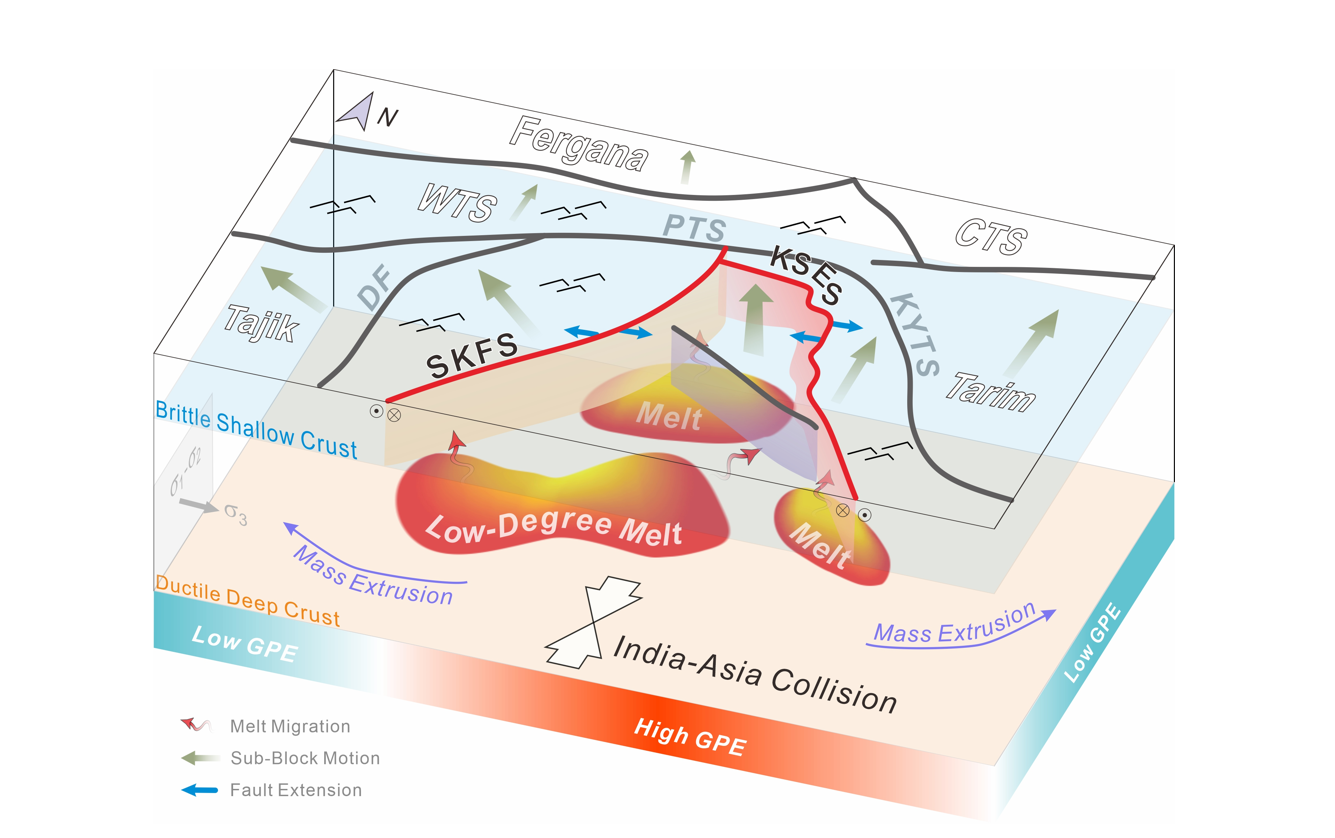
The Pamir is undergoing E–W extension accommodated by micro-block motions along major faults. Using an expanded Rayleigh‐wave dispersion data set and adjoint-state surface-wave traveltime tomography, we construct an updated crustal shear-wave velocity model and identify middle-to-lower-crustal low-velocity zones containing low-degree partial melt beneath the major fault systems. These melts substantially weaken the deep crust, localize strain, and promote fault development, showing that melt distribution regulates modern micro-block kinematics in the Pamir.
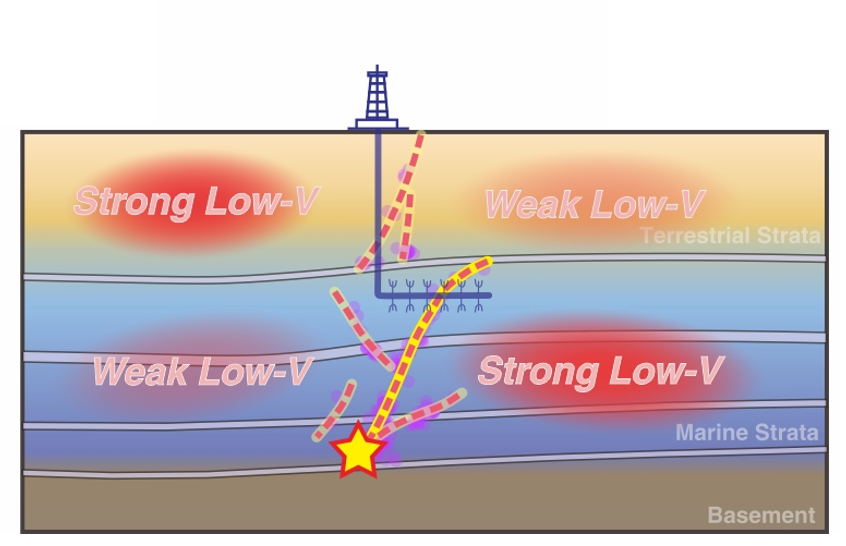
Induced seismicity in the southern Sichuan basin regulated by heterogeneous folding
Luxian, a key shale gas field in Sichuan, was struck by an Ms 6.0 induced earthquake in 2021. To characterize the seismogenic environment there, we constructed a sedimentary Vs model by ambient-noise tomography and analyzed focal mechanisms via ISOLA. Our results reveal that synclinal LVZs are controlled by heterogeneous strain intensities linked to variations in décollement depth. Notably, seismicity across all magnitudes clusters along the margins of these LVZs within marine strata. These boundaries represent high-risk zones for induced events and should be prioritized for future seismic hazard mitigation.
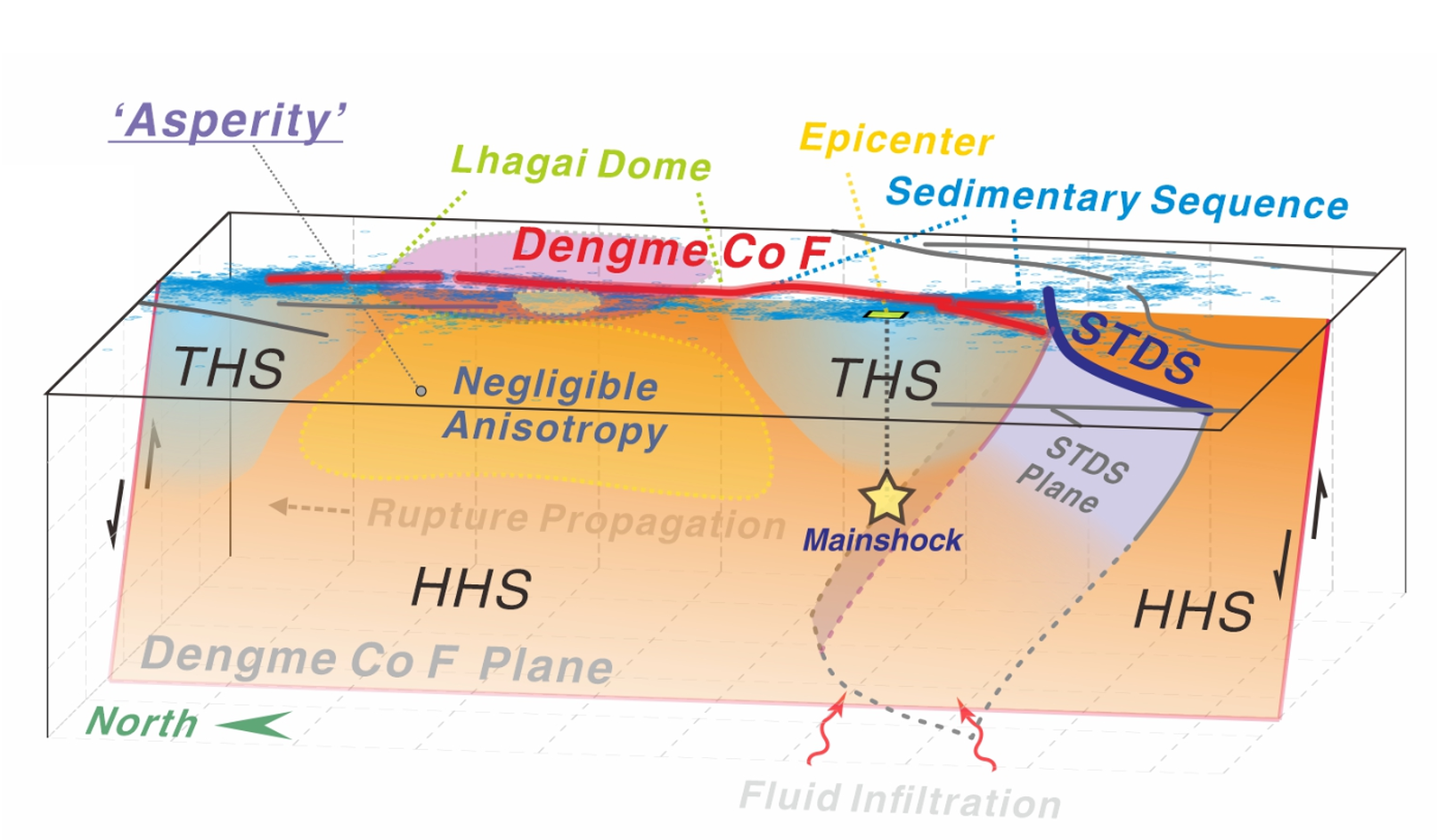
The Dingri earthquake ranks among the largest continental normal‐faulting events worldwide. We derive azimuthally anisotropic velocity models of its source region using adjoint‐state traveltime tomography to investigate its seismogenic mechanisms. Our results confirm the role of basal shear and fluid upwelling in Tibetan rifting and reveal a fault asperity with negligible anisotropy that is associated with the Lhagai gneiss dome, emphasizing the need to assess seismic hazards in southern Tibetan rift zones that intersect the Himalayan gneiss belt.
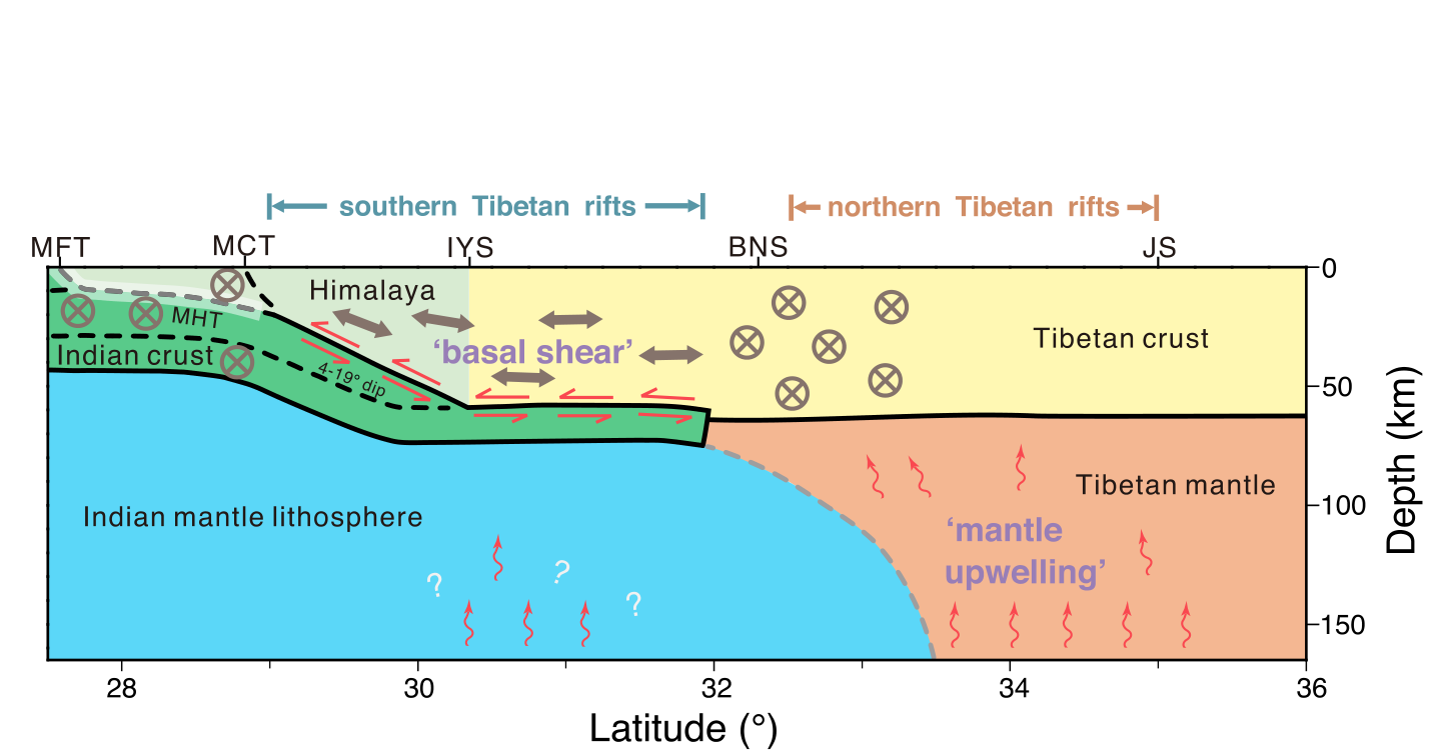
Tibet is the largest compressional orogen on Earth, yet it is currently experiencing orogen-wide extension. We conduct multi-phase shear-wave splitting analyses in Tibet, which reveal a strong correlation between anisotropy and tectonics. In particular, convergence-parallel fast orientations in the deep crust of the southern Tibetan rifts offer compelling evidence of the significant role played by the north-directed shearing (exerted by the underthrusting Indian plate) in facilitating the present-day extension in southern Tibet.
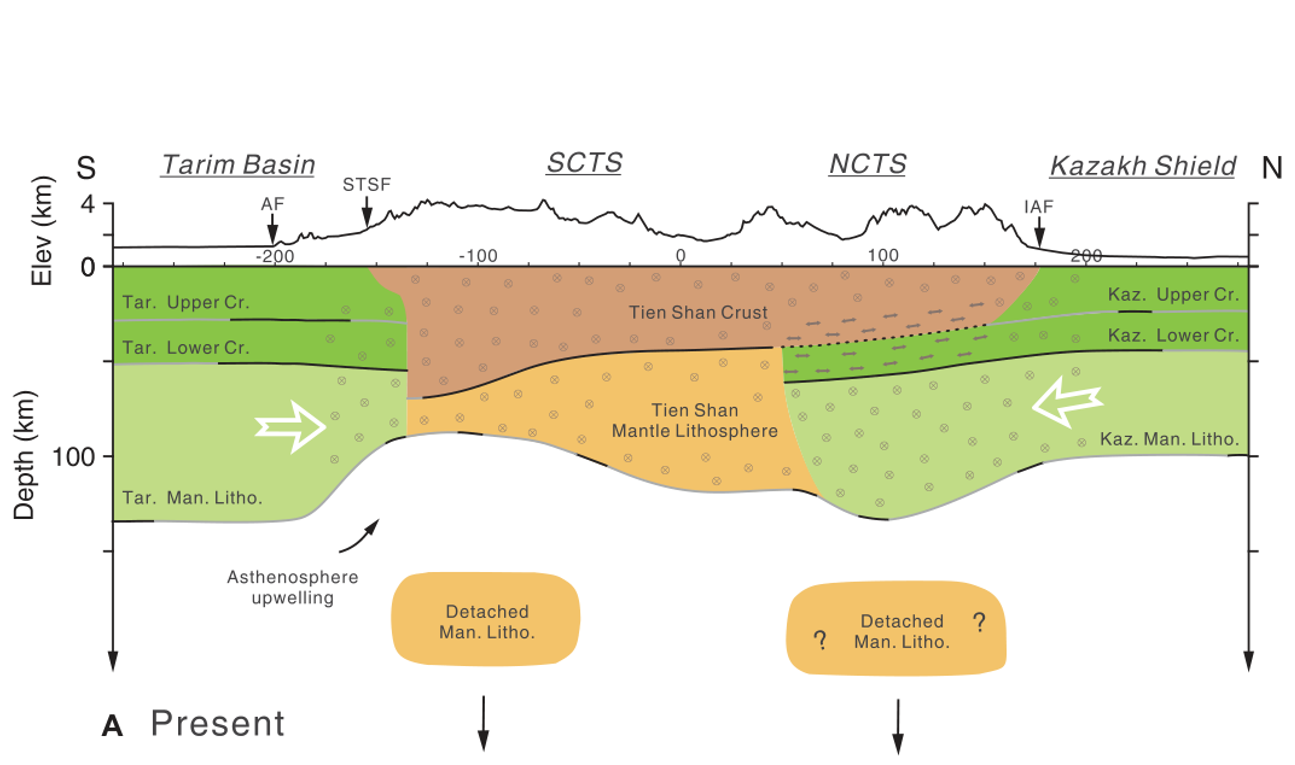
This work builds upon Zhang et al. (2020) to present additional constraints on the seismic anisotropy properties in the crust and upper mantle of the central Tien Shan through shear-wave splitting analyses. Across-strike variations of seismic anisotropy are revealed, offering additional evidence of the distinct deformational processes in the northern and southern parts of the Tien Shan. Our observations suggest that the rheological properties of bounding blocks significantly influence the lithospheric deformation modes in intracontinental orogens.
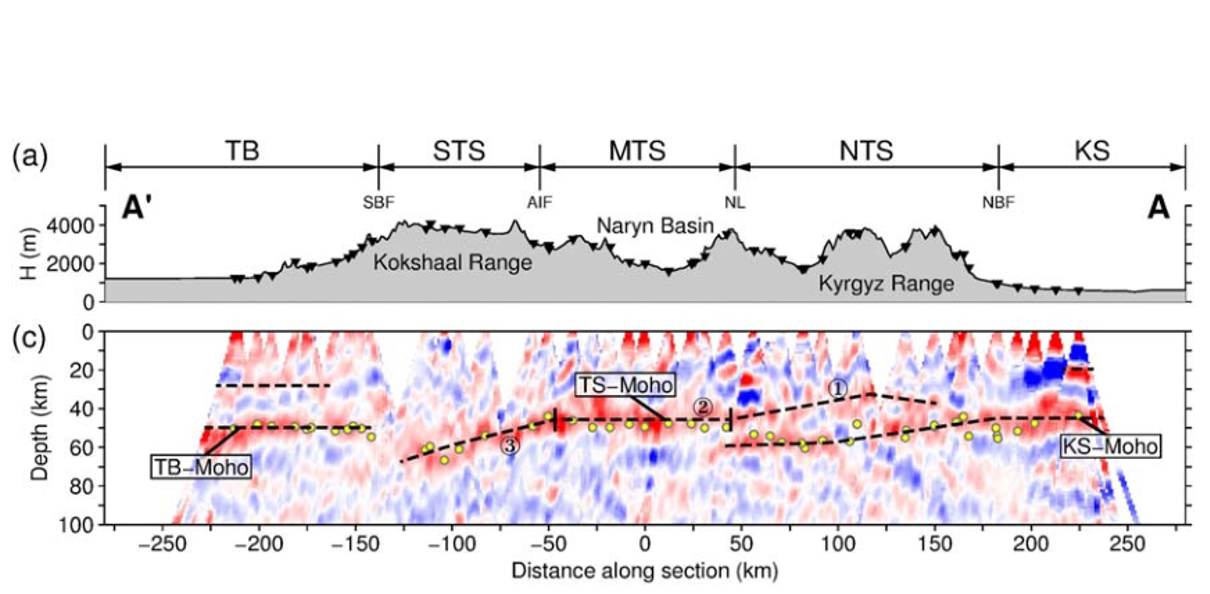
Distinct orogenic processes in the South- and North-Central Tien Shan from receiver functions
We obtain high-resolution images of the Moho structure across the Central Tien Shan (CTS) in Central Asia through RF techniques. An explicit Moho offset is observed in the southern CTS (SCTS) piedmont, which raises questions about the plausibility of the continental subduction scenario of the buoyant Tarim Basin lithosphere beneath the Tien Shan. Instead, we propose that shortening and thickening due to the northward indentation of the Tarim Basin is the primary mode of deformation in the SCTS.
📜 Peer‑reviewed Publications
-
⭐Zhang B., Hao, S., Bao, X., & Tong, P. (2026). Melt‐regulated crustal kinematics in the Pamir, NW Tibetan Plateau: Insights from surface‐wave tomography. Geophysical Research Letters, 53(17), e2026GL124055. https://doi.org/10.1029/2026GL124055 | [🔗PDF]
-
Chen, J., Li, T., Xiao, X., Wu, S., Bai, Y., Chen, G., Zhang B., Xu, M., & Tong, P. (2026). Crustal anisotropic velocity structure beneath California constrained by P and PmP traveltimes: Implications for fluid-promoted creeping along the central San Andreas Fault. Earth and Planetary Science Letters, 691, 120223. https://doi.org/10.1016/j.epsl.2026.120223
-
Wu, Y., Bao, X., Jiang, M., Zhang B., & Song, W. (2026). The significance of inherited crustal thickening in surface uplift of Hangai Dome in central Mongolia. Geophysical Research Letters, 53(13), e2026GL122916. https://doi.org/10.1029/2026GL122916
-
Bai, Y., Wei, S., Chen, J., Li, T., Zhang B., Xiao, X., Wu, S., Yao, J., Wang, Y., & Tong, P. (2026). Structural heterogeneity and anisotropy beneath Myanmar: Insights into the complex deformation of the Indo-Burma subduction zone. Earth and Planetary Science Letters, 679, 119879. https://doi.org/10.1016/j.epsl.2026.119879
-
⭐Zhang B., Bao, X., Jiang, M., & Zhou, K. (2026). Induced seismicity in the southern Sichuan basin regulated by heterogeneous folding. Earth and Planetary Science Letters, 679, 119860. https://doi.org/10.1016/j.epsl.2026.119860 | [🔗PDF]
-
⭐Zhang B., Tan, H., Xiao, X., Wang, D., Bai, Y., Li, T., Hao, S., Chen, J., Yao, J., Bao, X., & Tong, P. (2025). Crustal structure and seismogenic environment for the January 2025 Mw 7.1 southern Tibet (Dingri) earthquake. Journal of Geophysical Research: Solid Earth, 130(11), e2025JB032001. https://doi.org/10.1029/2025JB032001 | [🔗PDF]
-
Xu, M., Hao, S., Chen, J., Zhang B., & Tong, P. (2025). SurfATT: High‐performance package for adjoint‐state surface‐wave travel‐time tomography. Seismological Research Letters, 96(4), 2638-2646. https://doi.org/10.1785/0220240206
-
⭐Zhang B., Bao, X., Wu, Y., Jiang, M., & Zhou, K. (2025). Indian crustal front beneath Tibet inferred from seismic anisotropy. Seismological Research Letters, 96(1), 449-460. https://doi.org/10.1785/0220240103 | [🔗PDF]
-
Fan, J., Bao, X., & Zhang B. (2023). Crustal and upper mantle structure beneath SE China from joint analysis of receiver functions and Rayleigh-wave dispersion. Geophysical Journal International, 235(2), 1798-1809. https://doi.org/10.1093/gji/ggad336
-
⭐Zhang B., Bao, X., Wu, Y., Xu, Y., & Yang, W. (2023). Southern Tibetan rifting since late Miocene enabled by basal shear of the underthrusting Indian lithosphere. Nature Communications, 14, 2565. https://doi.org/10.1038/s41467-023-38296-w | [🔗PDF] | [ZJU News]
-
⭐Zhang B., & Bao, X. (2023). Research progress on seismic structures of crust and mantle beneath Tien Shan and their geodynamic implications. Reviews of Geophysics and Planetary Physics, 54(1), 27-43 (in Chinese with English abstract). https://dx.doi.org/10.19975/j.dqyxx.2022-048 | [🔗PDF] | [Excellent Youth Expert Paper Award]
-
Wu, Y., Bao, X., Zhang B., Xu, Y. & Yang, W. (2022). Seismic evidence for stepwise lithospheric delamination beneath the Tibetan Plateau. Geophysical Research Letters, 49(10), e2022GL098528. https://doi.org/10.1029/2022gl098528
-
⭐Zhang B., Bao, X., & Xu, Y. (2022). Seismic anisotropy in the central Tien Shan unveils rheology-controlled deformation during intracontinental orogenesis. Geology, 50(7), 812-816. https://dx.doi.org/10.1130/g49633.1 | [🔗PDF]
-
⭐Zhang B., Bao, X., & Xu, Y. (2020). Distinct orogenic processes in the South- and North-Central Tien Shan from receiver functions. Geophysical Research Letters, 47(6), e2019GL086941. https://dx.doi.org/10.1029/2019gl086941 | [🔗PDF]
🏆 Selected Honors and Awards
- 2025, Outstanding Doctoral Dissertation Nomination Award, Zhejiang Province
- 2024, Outstanding Doctoral Dissertation Award, Zhejiang University
- Pre-2024, Excellent Youth Expert Paper Award, Reviews of Geophysics and Planetary Physics
- Pre-2024, Outstanding Student Paper Award, 2022 Annual Meeting of Chinese Geoscience Union
- Pre-2024, National Scholarship for Doctoral Students, Ministry of Education of P.R.China
- Pre-2024, Outstanding Student Paper Award, 3rd Youth Academic Forum about Structural Geology and Geodynamics
🏛️ Academic Services
- Peer-reviewer of scientific journals: JGR, JAES